Showing posts with label AFRICA. Show all posts

Thursday, 16 April 2015

BAD HOSTS :Why black South Africans are attacking foreign Africans but not foreign whites

 BAD HOSTS

Why black South Africans are attacking foreign Africans but not foreign whites


The attacks on migrant shop owners in Durban this week reminds us the position of foreigner in South Africa is a complex one. After decades of isolation from the rest of the African continent, and the world, during apartheid, South Africa finally opened up to the rest of world in 1994.
Under apartheid, South Africa’s immigration mirrored the narrow mindedness and prejudice of the National Party. Several laws made visiting or living in South Africa unpalatable to many. Particularly those of non-European descent.
At the dawn of the “new South Africa” in 1994, the country became home to many outsiders playing a key role in offering protection and refuge to people who had suffered unfavorable conditions in their home countries.
At the heart of South Africa’s complex problem with xenophobia is the loaded meaning of the term “foreigner.” Pejoratively, the term “foreigner” in South Africa usually refers to African and Asian non-nationals.
“Other” foreigners—particularly those from the Americas and Europe go unnoticed—they are often lumped up with “tourists,” or even better, referred to as “expats.”
It is this reason why the South African government says its hesitant to call the recent attacks on foreign nationals as xenophobic.

Is it “Afrophobia” or xenophobia?

Many South Africans look at the attacks on enterprising African immigrants from Somalia, the Democratic Republic of Congo, Mozambique, Nigeria and Malawi—often running shops, stalls and other businesses in the informal economy—and resolve that the current attacks on foreigners are more afrophobic, than xenophobic.
Many ask: “Why is it that a Somali man can run a shop in a township, get raided and beaten up, while a white immigrant in town continues to run a restaurant full of patrons?”
It is this delineation that breeds ground for denial.
While this sentiment may be correct—that the violent expression of xenophobia in South Africa is meted out mainly against African immigrants – it is unhelpful to resolve the crisis that has left many foreign nationals homeless, tortured and dispossessed.
While we can ascribe the attacks to sentiments of Afrophobia, we must be willing to agree that the attacks are fuelled by a sense of hatred, dislike and fear of foreigners – and that is xenophobia. And given the fact that foreign nationals from Pakistan and Bangladesh have been profiled in this wave of attacks, it will soon no longer be enough for South Africans to cry “Afrophobia.”

 A hangover from the past, fueled by present

South Africa’s xenophobia reflects the country’s history of isolation. As a country at the Southern most tip of Africa, South Africans are fond of referring to their continental counterparts as “Africans” or “people from Africa.” Many business ventures, news publications and events—aimed at local audiences—routinely speak about “going to Africa.”
Of course this narrow-mindedness, suffered by both black and white South Africans, is a by-product of apartheid. For black people, apartheid was an insidious tool used to induce self-hate and tribalize people of the same race. For white South Africans, apartheid was a false rubber-stamp of the white race as superior.
It is these two conceptions that gave rise to the myth that South Africa is not part of the African continent, but a different place that just happens to be on the tip of the continent.
Long after the scourge of apartheid, it is also clear that we’re fueling this prejudice in the present.
It remains to be seen whether South Africans will break away from these shackles, and rid themselves of this horrid prejudice anchored in our past, but seemingly fuelled by our present.

Wednesday, 27 August 2014

Calderoli insiste: "Su di me macumba".

Calderoli insiste: "Su di me macumba". Papà Kyenge: "Hai fatto innervosire antenati"

L'ex ministro leghista: "Negli ultimi tempi mi è capitato di tutto, chiedo la revoca del rituale". Clement Kikoko Kyenge effettuò un rito tribale dopo alcune frasi razziste dell'esponente leghista. Kyenge: "Sono cattolica, non credo a queste cose"
MILANO - "Non sono mai stato superstizioso ma dopo la macumba che mi ha fatto il papà della Kyenge  mi è capitato di tutto e di più". Roberto Calderoli insiste e rilancia una storia che assomiglia sempre di più alla sceneggiatura di un film tragicomico. Intervistato dal settimanale Oggi l'esponente leghista rilancia le accuse rivolte al padre dell'ex ministro dell'Integrazione Cecile Kyenge.

"Sei volte in sala operatoria, due in rianimazione, una in terapia intensiva, è morta mia mamma e nell'ultimo incidente mi sono rotto due vertebre e due dita" ricorda l'ex ministro, reduce dalle fatiche parlamentari dove è stato relatore di maggioranza del ddl Riforme al Senato e sono in molti a ricordarlo con il braccio fasciato durante le sedute.

Dopo le disgrazie che gli sono accadute nei mesi scorsi, l'ex ministro leghista lancia un appello al padre della Kyenge: "Forse è il caso di mandare un messaggio distensivo a papà Kyenge per chiedergli la revoca del rituale che mi fece".

Pochi giorni fa Calderoli era stato protagonista di un altro episodio inquietante: aveva diffuso in rete le foto di un serpente di due metri trovato nella sua cucina e prontamente ucciso.

"Non sono mai stato superstizioso ma dopo la macumba che mi ha fatto il papà della Kyenge mi è capitato di tutto e di più", aveva postato su Fb alcuni giorni fa l'ex ministro, che continuava: "Non so se devo mettere un annuncio sul giornale o chiamare direttamente Bergoglio, sempre che non sia troppo occupato a sistemare gli immigrati a casa nostra, ma io devo trovare assolutamente un esorcista. Se qualcuno ha numeri di telefono o mail di esorcisti li aspetto con gratitudine...".

Il rituale del padre della Kyenge arrivò dopo le dichiarazione shock del luglio scorso dell'ex ministro leghista, che alla festa leghista di Treviglio paragonò l'allora ministro dell'Integrazione "ad un orango", salvo poi scusarsi pubblicamente.

Clement Kikoko Kyenge, raggiunto in Katanga (Repubblica democratica del Congo) dal settimanale Oggi, decise allora di compiere un rito tribale su di lui "affinchè gli avi lo liberassero da cattivi pensieri e parole offensive, usando parole di tolleranza e non di vendetta".

Evidentemente le rassicurazioni sull'effetto positivo del rituale non sono bastate a Calderoli, che insiste: "Le foto e i video di Oggi erano inquietanti: avevano messo una mia foto in mezzo ai termitai. Non è un messaggio amichevole. Dopo quel rito alcuni colleghi napoletani mi regalarono un cornetto di corallo: due giorni dopo, senza una pressione di nessun genere si è spezzato in due. Una maga ha visto forze tremende in azione attorno a me".

Il settimanale ha raggiunto telefonicamente lo stesso Clement Kikoko Kyenge, che dice: "Un serpente in casa non è un bel segnale e non sono sicuro che Calderoli abbia fatto bene a ucciderlo... Se quando lui ha chiesto scusa a Cecile era sincero, può stare tranquillo. Se invece quelle scuse sono state frutto di calcolo e convenienza, gli antenati potrebbero innervosirsi".

Alle parole di Calderoli ha replicato dalle colonne di Affaritaliani.it la Kyenge, oggi eurodeputata del Pd, infastidita dalle affermazioni del vicepresidente del Senato: "Mi chiedo che religione pratichi il senatore Calderoli. Io sono cattolica per cui non credo a tante altre pratiche o tanti altri riti. Che per me non esistono, per cui non sto dietro a queste sue esternazioni che secondo me vanno anche contro le credenze".

Kyenge ha negato che sia mai stata fatta alcuna macumba da parte di suo padre che anzi, sottolinea, "gli ha rivolto un gesto di perdono e di accoglienza". Un perdono che però non eviterà al vicepresidente del Senato il processo per dichiarazione aggravata da odio razziale. "Il 30 c'è il processo e ci troviamo lì" ha concluso l'ex ministro.
http://www.repubblica.it/politica/2014/08/26/news/calderoli_padre_kyenge_macumba-94470001/?ref=HRER2-1

Friday, 4 July 2014

The Power (and Weakness) of African Passports

The Power (and Weakness) of African Passports

July 3, 2014 — 

With geopolitics playing in, travellers from some countries get more travel freedom than others, a new ranking shows.

passport_montage2

Making waves in the travel world this week: a ranking of the globe’s most powerful passports that reveals the comparative weakness of many African ones.
Even in the digital age, passports haven’t changed much in form. The 3-by-5-inch booklets vary in little except color. But they entitle bearers from different countries very different levels of travel freedom.
GOOD Magazine, a U.S.-based quarterly emphasizing global citizenship, released an infographic — a map and accompanying list—of the rankings based on how many countries citizens of each country can travel to freely.
Infographic from GOOD Magazine detailing the areas with most powerful passports in blue, least powerful in the palest colours
Infographic from GOOD Magazine detailing the areas with most powerful passports in darker colours, least powerful in the palest colours
On the map, the more travel freedom a country’s passport allows, the darker it appears in color. The less freedom it allows, the lighter in color. Like a huge swath of Asia and the Middle East, the continent of Africa appeared largely pale.
The most powerful African passport is Mauritius, with open travel to 126 countries, then next is the Seychelles, open to 123. South Africa’s is the third most powerful, which receives open travel to 94 countries. The least is Somalia’s, with 32, followed closely by Eritrea’s, with 36. Passports from many African countries allow free and open travel to between 40 and 60 other nations.
Worldwide, the most powerful passports are from the United Kingdom, Finland, and Sweden. They each get open travel to 173 countries. (The United States, which bans most travel to Cuba, allows open travel to 172.) The least powerful are from Afghanistan and Iraq, with 28 and 31, respectively.

Most Powerful African Passports

South Africa: 94
Botswana: 70
Kenya, Lesotho, Namibia: 68
Malawi: 67
Swaziland, Zambia: 66
The ranking exposes the geopolitics between nations, which play out in the requirements for visitors from certain other countries to obtain visas.
Essentially, passport grants authorization from a citizen’s own country to travel abroad. A visa means express permission from the desired destination to visit there.
Defined as “an endorsement on a passport indicating that the holder is allowed to enter, leave, or stay for a specified period of time in a country,” a visa requires a special application, a period of time, occasionally an interview, and often a substantial fee to receive.
Governments are coy about why visas are required. GOOD reports they reflect “the relationship between two nations, and a country’s stature relative to the rest of the world.”

Least Powerful African Passports

Somalia: 32
Eritrea: 36
Sudan: 38
Congo, Libya, South Sudan: 39
Angola, Dijibouti: 40
The Chicago Tribune goes further, saying the reason some countries require visas for visitors from certain other countries is simple. “Richer countries tend to make people from poor or war-torn countries get visas as an extra step to make sure visitors return to where they came from,” the newspaper reports. “Poor countries are more likely to admit people from rich countries without visas.
“Sometimes, it’s political,” the Tribune adds. “Experts view Brazil’s visa requirement and hefty fee for Americans as a retaliation for stringent visa requirements and an identical fee that Brazilian tourists must pay to visit the U.S.”
As the world stature of many African countries rises, and conflict-troubled countries settle into peace, African citizens can expect their passports to become more powerful. Stay tuned.
http://thisisafrica.me/lifestyle/power-weakness-african-passports/

Thursday, 26 June 2014

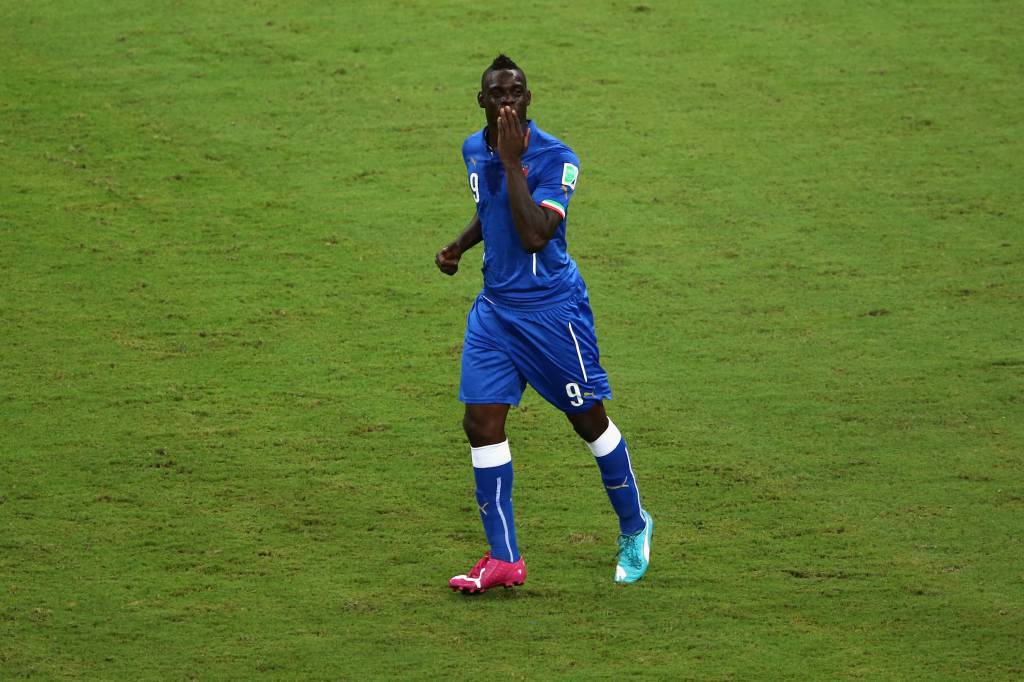
BALOTELLI:........IL CAPRO ESPIATORIO

balotelli1 670x446 Italia, Balotelli scrive una lettera: Ho la coscienza a posto, ho dato tutto! Italia, Balotelli scrive una lettera: ‘Ho la coscienza a posto, ho dato tutto!

ITALIA BALOTELLI LETTERA – Dopo gli attacchi ricevuti e le tante parole del day after, Mario Balotelli, attaccante della nazionale italiana, su Instagram ha scritto una lettera pubblica in cui si difende dalle accuse mosse contro di lui nelle ultime ore: “Sono Mario Balotelli ho 23 anni e non ho scelto di essere italiano. L’ho voluto fortemente perché sono nato in ITALIA e ho sempre vissuto in ITALIA. Ci tenevo fortemente a questo mondiale e sono triste arrabbiato deluso con me stesso. Si magari potevo fare gol con la Costa Rica avete ragione. Ma poi? Poi qual è il problema? Forse quello che vorreste dire tutti è questo? La colpa non la faccio scaricare a me solo questa volta perché Mario Balotelli ha dato tutto per la nazionale e non ha sbagliato niente a livello caratteriale. Quindi cercate un’altra scusa perché Mario Balotelli ha la coscienza a posto ed è pronto ad andare avanti più forte di prima e con la testa alta. Fiero di aver dato tutto per il Suo paese. O forse, come dite voi, non sono Italiano. Gli africani non scaricherebbero mai un loro ” fratello” . MAI. In questo noi negri, come ci chiamate voi, siamo anni luce avanti. VERGOGNA non è chi può sbagliare un gol o correre di meno o di più. VERGOGNOSE SONO QUESTE COSE. Italiani veri! Vero?”.
La redazione di Calciomercatonews.com
http://www.calciomercatonews.com/ultime-notizie/2014/06/25/italia-balotelli-scrive-lettera-coscienza-posto-dato-tutto/

Sunday, 8 September 2013

South African town accused of keeping apartheid alive

South African town accused of keeping apartheid alive

By Nkepile Mabuse, CNN
May 31, 2013 -- Updated 1043 GMT (1843 HKT)

Whites-only area reminiscent of apartheid

STORY HIGHLIGHTS
  • The South African community of Kleinfontein is accused of keeping apartheid's ideals alive
  • Apartheid was a policy of systematic racial discrimination
  • A Kleinfontein spokeswoman says it is a "cultural community" for Afrikaaners only
  • Its residents are accused of using culture and heritage to discriminate against black people
(CNN) -- More than two decades after the death of the systematic racial discrimination policy of apartheid, a community living southeast of South Africa's capital Pretoria is being accused of trying to keep its racist ideals alive.
White men clad in military uniforms stamped with an old South African flag guard the gates of the controversial settlement known as Kleinfontein.
All the signs within its boundaries are written in Afrikaans, the language that developed out of the Dutch dialect spoken by early colonizers and which is spoken by the town's 1,000 white inhabitants.
A bust of Hendrick Verwoerd, the assassinated prime minister considered the architect of apartheid, greets visitors upon entry.
"Kleinfontein is a cultural community," explains its spokeswoman Marisa Haasbroek, "if you are not an Afrikaaner you cannot live here." Afrikaaners are white South Africans of mostly Dutch descent. The private settlement has made headlines in recent weeks after it was exposed by a local newspaper. Haasbroek defends its existence saying residents simply want to live among their own kind.
The 50-year-old mother of two tells CNN she moved to Kleinfontein six years ago shortly after her car was stolen in the city center.
"I was just sick of crime," she says. "My parents-in-law were already living here and they told us Kleinfontein is safe," Haasbroek, her engineer husband and their children packed their belongings and moved to the "whites only" enclave.
The area has been in existence since the 1990s. It was formed on the eve of democratic elections at around the same time as its better-known sister settlement, Orania, in the Northern Cape. Most South Africans knew Orania but have only recently learned about Kleinfontein.
Its residents are accused of using culture and heritage to discriminate against black people.
There were even reports that the community has once refused to be assisted by black police officers.
"That's simply not true," Haasbroek says. "We do not discriminate, we differentiate."
South Africa's official opposition recently held a protest at Kleinfontein vowing to "liberate" residents from their "apartheid mindsets."
The mayor of Tshwane -- the municipality Kleinfontein falls under -- has also conducted a site visit, saying he supported the residents' right to "conserve their heritage but that it must be balanced with the freedom of others to reside anywhere in the republic."
Despite differing opinions on the matter their right to self-determination is protected by the constitution and the government has said they have the right to live this way.
Race is still an emotional topic in South Africa and Haasbroek has been at pains to explain that residents are screened based on culture, language, religion, history - but not race.
"We are trying to preserve our own identity," Haasbroek says. "We are swamped by people who are not like us. We are a minority like the people of Tibet in China and like the Palestinians. But we don't want our own state. We respect the laws of South African and we want to remain here."
Orania and Kleinfontein represent about 2,000 people, a tiny minority of the overall Afrikaaner community in South Africa. Haasbroek says crime and affirmative action have left them feeling left out of the so-called "Rainbow Nation."
"We don't really feel welcomed in the new South Africa so we are saying, just give us a little bit of independence."
They already run their own school and they build their own infrastructure. They want to be recognized as a self-contained municipality -- something the local government has said will not happen.

http://edition.cnn.com/2013/05/31/world/africa/south-africa-kleinfontein-apartheid-nkepile-mabuse

Monday, 15 July 2013

Un' altro 'cattivo'

Si toglie le infradito e rincorre scippatore. Un migrante eroe sul Viale della Stazione
Restituita la borsa alla vecchietta scippata

Quando ha visto che la vecchietta era stata scippata della sua borsa, non ci ha pensato un momento. Si è sfilato le infradito dai piedi e si è messo alla caccia del ladro. Lo ha rincorso lungo il viale della Stazione, scansando panchine e passanti. Una volta raggiunto il ladruncolo, ha recuperato la borsa e  permesso alle forze dell'ordine di arrestare il malvivente. Protagonista di questo episodio che mette in risalto un grande senso civico, un giovane ragazzo africano, che trovandosi a passare lungo il Viale della Stazione di Foggia ha notato tutta la scena.

AL POSTO GIUSTO Coraggio e velocità, poi, hanno fatto il resto e così il migrante ha potuto restituire borsa e refurtiva alla legittima proprietaria. Un evento di cronaca nera finito a lieto fine e capitato proprio nella strada in cui negli ultimi anni non sempre sono facili i rapporti di convivenza tra commercianti e residenti italiani, ed immigrati. Ma questa volta, la fortuna ha voluto che quel ragazzo si trovasse a passare al posto giusto nel momento giusto.

Grazie per la foto a S.D.

http://www.foggiacittaaperta.it/news/si-toglie-le-infradito-e-rincorre-scippatore-un-migrante-eroe-sul-viale-della-stazione.asp

CALDEROLI & CO...Insulti...Insulti e insulti !!!!!!!

Calderoli: "Kyenge? Sembra un orango"
Letta: "Inaccettabile". Colle indignato

Fonti Quirinale: "Napolitano colpito da gravi episodi". Condanna del premier Consiglio. Il vicepresidente del Senato del Carroccio: "Solo una battuta simpatica, ho telefonato per scusarmi". Il ministro dell'Integrazione: "Provo rammarico, l'offesa è per l'Italia". Maroni: "Ha sbagliato, ma ha chiesto scusa". Salvini: "Parole fuori posto, ma lei è pericolosa". Speroni (Lega): "È paffutella,  sembra l'omino Michelin"
ROMA - È polemica sulle dichiarazioni shock del leghista Roberto Calderoli che, alla festa del suo partito a Treviglio, ha detto riferendosi al ministro Cecile Kyenge: "Quando la vedo non posso non pensare a un orango". Parole infelici che non sono piaciute nemmeno agli altri esponenti del Carroccio e hanno scatenato una bufera: Letta è furioso, il Pd chiede le dimissioni del senatore da vicepresidente del Senato, lui si giustifica riducendo l'accaduto a una "battuta simpatica" e il ministro dell'Integrazione, vittima dell'attacco, esprime rammarico: "Le parole di Calderoli non le prendo come un'offesa personale, ma mi rattristano per l'immagine che diamo dell'Italia. Credo che tutte le forze politiche debbano riflettere sull'uso che fanno della comunicazione". E Maroni interviene solo in serata: "Ha sbagliato, ma si è scusato".

Telefonata di scuse. In serata il ministro Calderoli ha detto di essersi scusato personalmente con Kyenge: ''Ho parlato poco fa al telefono col ministro Kyenge e mi sono scusato. Ci siamo chiariti - ha aggiunto l'esponente leghista - e ci siamo dati appuntamento in Parlamento per un confronto franco e leale''. Poco dopo ha parlato anche il ministro: "Sì, il sen. Calderoli mi ha telefonato ed io ho accettato le scuse. Ma il nodo istituzionale resta: ciascuno deve tener presente sempre la carica che riveste". Caso chiuso? "Il caso non è mai esistito a livello personale - ha risposto Kyenge -, resta aperto a livello istituzionale". 

Colle indignato. Ma una telefonata forse non basterà a spegnere le polemiche e fonti del Quirinale hanno fattoo sapere che anche il presidente della Repubblica, Giorgio Napolitano, è "colpito ed indignato" per alcuni "gravi episodi" accaduti in questi questi giorni, dalla vicenda delle minacce a Mara Carfagnaall'incendio del liceo Socrate di Roma, fino agli insulti odierni al ministro Kyenge,  "che dimostrano tendenza all'imbarbarimento delle vita civile e affronterà il tema nell'incontro con la stampa del 18 luglio".

Letta furioso. A condannare senza appello la frase razzista è il presidente del Consiglio Enrico Letta: "Inaccettabili oltre ogni limite le parole di Calderoli - scrive il premier su Twitter - avanti Cecile col tuo lavoro! Siamo con te". 

Le giustificazioni di Calderoli.
 Per tutto il giorno Calderoli si difende: "È stata solo una battuta simpatica", spiega in un'intervista a Radio Capital. "Ho parlato in un comizio - tenta di giustificarsi - la mia battuta si è inserita in un ben più articolato e politico intervento di critica al ministro e alla sua politica". Ma persiste nella linea xenofoba: "Avevo appena detto che sarebbe un'ottima ministra... in Congo. Va benissimo come ministro ma a casa propria". Quanto all'ipotesi di dimissioni taglia corto: "Stiamo scherzando? Non ci penso proprio". In serata ha aggiunto al Tg1: ''Sono disponibile al confronto, ma sono pronto a dare battaglia in tutte le sedi riguardo alle sue posizioni che considero sbagliate sull'immigrazione''.
http://www.repubblica.it/politica/2013/07/14/news/vedo_il_ministro_kyenge_e_penso_a_un_orango_e_polemica_per_la_frase_del_leghista_calderoli-62945682/?ref=fbpr